

Souri Olive Oil and the Story of Rameh
In Rameh, a conversation about olive oil often becomes a story: a walk to the groves, a meal beneath the trees, the first taste of a new pressing. For generations, the harvest has brought families together around work, food and a shared pride in the oil of their village.
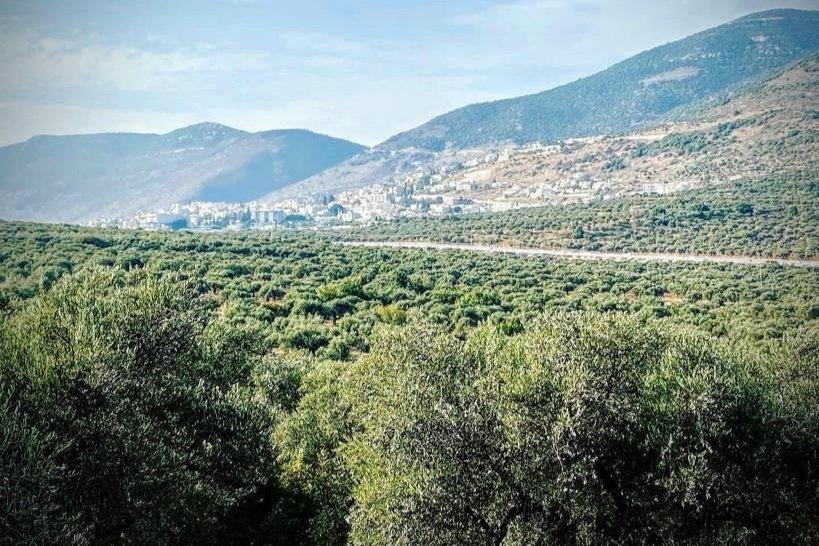
On the slopes of Mount Haidar in the Galilee, olive groves surround Rameh and reach into its everyday life. Their place in the landscape is matched by their place in Palestinian cooking and memory. To understand the oil, it helps to meet the village that has cared for these trees.
A reputation recorded more than a century ago
In 1910, agronomist Aaron Aaronsohn singled out Rameh in Agricultural and Botanical Explorations in Palestine, a bulletin published by the United States Department of Agriculture. He praised the productivity and quality of its olives, paying particular attention to the consistency of the fruit and the care devoted to cultivation.
What makes this account compelling is its attention to the growers. Rameh’s reputation was already connected to the work people put into their trees. The excerpt below preserves that early description. Read Aaronsohn’s 1910 account.

The village through Ali Nasuh al Tahir’s eyes
The agricultural writer Ali Nasuh al Tahir also gave Rameh a special place in his writing. In passages from his 1947 book The Olive Tree, reproduced by the MA’AN Development Center, he called Rameh the queen of oil and recalled his work near its groves.
His account describes friendships with growers, conversations about cultivation and the value he found in their observations. It offers a glimpse of agricultural knowledge being shared between people who studied olive trees and people who lived by them. Explore these passages from al Tahir’s writing.
Harvest days remembered in Rameh
Reem Kassis brought these village traditions to readers of The New York Times in October 2021. Her article opens with Abla Hussein remembering childhood harvest days: the walk to the groves, food packed for the family and long hours spent among the trees. These details make the history tangible. The harvest was part of how people worked, ate and spent time together.
Kassis also spoke with our father, Musa Khalaf, about Souri olives, careful pruning, choosing when to pick and pressing the fruit soon after harvest. She described the oil’s place in our family’s kitchen, from lentil dishes to breads and baking. Their voices sit alongside those of other villagers, each adding a different part of Rameh’s olive story. Read Reem Kassis’s article.

The deeper roots of olive cultivation
Research into the wider region takes the story much further back. In a 2022 study, archaeobotanist Dafna Langgut and archaeologist Yosef Garfinkel examined ancient charcoal from Tel Tsaf in the central Jordan Valley. Olive wood found beyond the tree’s natural habitat provided strong evidence that people were cultivating olives there about 7,000 years ago.
These archaeological dates describe early cultivation in the wider region. Rameh’s own history comes into focus through its agricultural records, surviving groves and the memories of its growers. Together, they give us different ways to understand the long relationship between people and olive trees. Read Langgut and Garfinkel’s research.

Souri olives and the taste of Rameh
Souri, also spelled Suri, is the olive variety at the heart of our oil. In Kassis’s reporting, villagers describe Rameh’s oil through familiar tastes and textures, recalling grasses, ripe fruit and a smooth richness. Their descriptions express a local palate shaped by years of tasting the harvest.
Our Souri extra virgin olive oil has a fruity aroma, grassy notes and a peppery finish, with character that varies from one harvest to the next. Try it with warm bread, labneh or a bowl of mujaddara. These simple foods give the oil room to be tasted and connect it to the everyday cooking that has sustained its reputation.
A tradition carried through change
The village’s olive story also includes difficult chapters. Kassis’s article describes how land loss, restrictions on access to groves and changes in regional trade affected olive farming after 1948. Families’ sources of income changed, and fewer households came to depend on the harvest for their livelihood. Yet the trees continued to matter, and oil remained central to home cooking and village identity.
For us, continuing this work means caring for the groves, listening to the experience of earlier generations and making room for the next. You can visit our groves through their story or meet Basma and Maria to learn how we are carrying it forward.
A place for Rameh at your table
We make our oil from our own Souri olives, harvested by hand and cold extracted at our family mill. Choose a 500 ml bottle or a 2 L tin, and explore the 2026 harvest preorder. Every new pressing is another season in this village story, ready to become part of your own meals and memories.


